
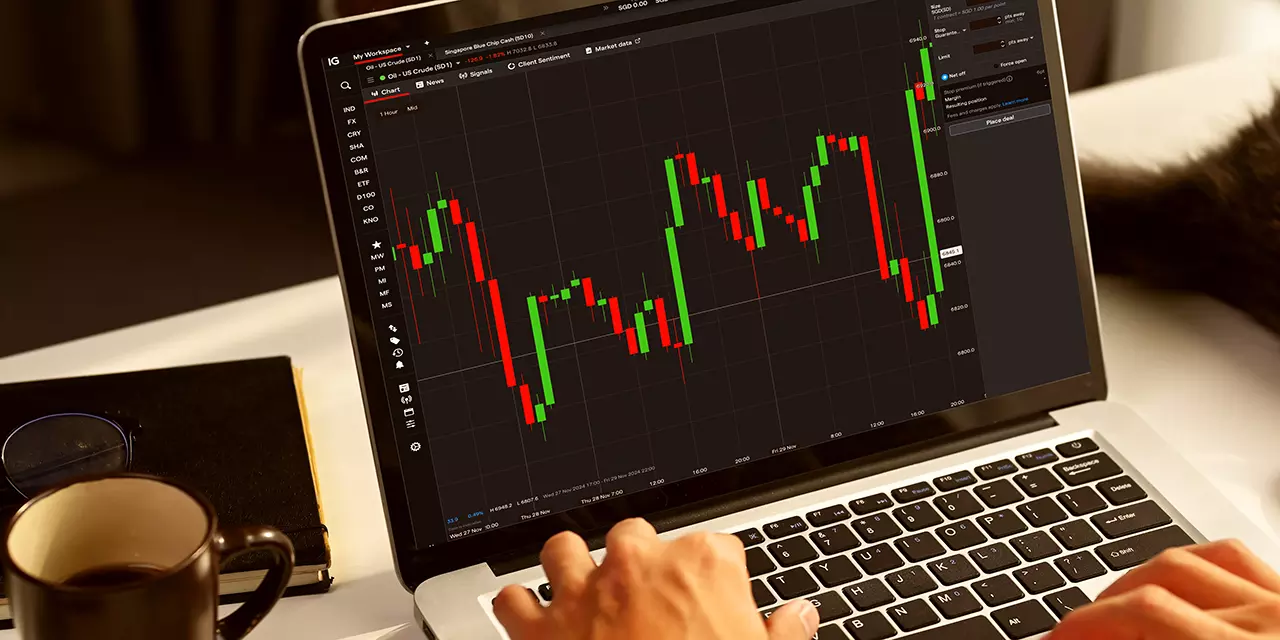
If you’ve spent any time around prop firms, you’ll notice one thing pretty quickly: a lot of their traders are glued to the S&P 500 futures chart. It’s not just some random obsession—it’s because S&P futures, particularly the E-mini and Micro E-mini contracts, have become the go-to instrument for many prop traders who want consistency, liquidity, and solid profit opportunities.
But why? Of all the markets available out there—forex pairs, individual stocks, crypto, commodities—what is it about S&P futures that continues to attract prop traders in droves? Let's explore it and dissect exactly why these contracts have become the bread and butter for so many traders within prop firms.
What Are S&P Futures?
S&P 500 futures are contracts that track the value of the S&P 500 index, which itself represents 500 of the largest publicly traded U.S. companies. Basically, when you’re trading S&P futures, you’re speculating on where the broader U.S. stock market is heading.
Two of the most popular contracts are:
- E-mini S&P 500 futures (ES) – The standard contract most prop traders focus on.
- Micro E-mini S&P 500 futures (MES) – A smaller version that enables traders to control risk more accurately.
Both provide traders with access to one of the world's most highly traded and liquid markets. That's massive, particularly in a prop firm environment where capital deployment and steady performance matter most.
Liquidity: The Lifeblood of Prop Traders
If there is one thing that all prop traders love, it is liquidity. And S&P futures are essentially the liquidity king.
Any given trading day, millions of contracts are exchanged. What does that translate to in simple terms? It means that traders can get in and out of positions rapidly without concerning themselves with gigantic slippage devouring their profit margins. For prop traders, who may need to trade in and out of a trade several times a day, that's pure gold.
Liquidity also makes the S&P futures market less prone to wild, unpredictable spikes (unless we’re talking about major news events). That sense of “stability” makes it easier for traders to plan and execute strategies with confidence.
Volatility, But Not Too Much
How to invest in S&P 500 is the right amount of volatility.
Too little volatility and there’s nothing to trade—your charts just look like flat lines. Too much volatility and you’re basically gambling, hoping the market doesn’t blow up your stop-loss.
S&P futures provide you with sufficient intraday action to get opportunities without losing control. For scalpers and day traders within prop firms, this is ideal. They can take several trades a day without the heart-stopping mayhem you may encounter in, for example, crypto or penny stocks.
Tight Spreads Mean Lower Costs
Trading isn't always about profiting—it's about avoiding unnecessary loss. That's why spreads are important.
In very liquid markets such as S&P futures, the bid-ask spread is a sliver, usually a tick or less. That means lower trading costs for the trader, particularly those dealing with high frequency or scalping techniques.
Futures prop firms adore this because lower trading costs mean more of their traders' profits are retained in-house, rather than devoured by spreads and commissions. After hundreds of trades, that makes a big difference.
The S&P 500 = A Market Proxy
Another reason that S&P futures are so appealing is that they're essentially a one-stop shopping experience for trading the entire U.S. market.
Consider it: the S&P 500 has Apple and Microsoft, the financial giants like JPMorgan, the consumer staples like Coca-Cola, and on and on. It's a representative overview of the U.S. economy.
Rather. Instead of attempting to select which stock will perform better on any given day, traders can simply trade the index overall. That conserves time, makes analysis easier, and still offers ample movement to trade.
For prop traders balancing multiple strategies and risk factors, that simplicity is a huge advantage.
Futures Trade Nearly 24/7
Another benefit that sets S&P futures apart: they're accessible nearly around the clock. From Sunday night through Friday afternoon, the market is open nearly 24 hours a day.
For traders in various time zones—or simply those who enjoy capitalizing on overnight action—such flexibility is enormous. Prop houses with traders located all over the world can count on S&P futures as a reliable instrument for all shifts.
Clear Patterns and Technical Setups
If you’ve ever looked at the S&P futures chart, you’ll notice it tends to respect technical levels. Key areas like previous day highs and lows, VWAP (Volume Weighted Average Price), and psychological round numbers (like 5000 or 5100) get a lot of attention.
Why is that important? Because prop traders live by reproducible setups. If the market consistently responds to levels that repeat, then traders can develop strategies based on them and validate them with data.
Relative to markets that seem random or rigged, S&P futures tend to operate in patterns technical traders can grasp and foretell—at least to some reasonable degree.
Prop Firms and Risk Management: S&P Futures Fit the Bill
Prop houses don't simply give out money and cross their fingers. They have strict guidelines on risk control: daily drawdowns, max losses, position sizing, and more.
S&P futures help traders stick to those guidelines. Why?
- Micro contracts enable traders to scale down if necessary.
- The liquidity of the market guarantees stop-losses actually get executed.
- Volatility is tame enough to prevent instant account blow-ups (once again, except during extreme news events).
Short, S&P futures provide prop traders with the instruments they require to manage risk in a responsible manner. That's the primary reason why companies encourage or even mandate their traders to trade them.