
When the management of a regional oil and gas training center decided to build a workover training program from scratch, they had no shortage of advice. Vendors offered hardware, consultants offered curricula, and industry colleagues offered warnings about simulators that arrived, impressed for a month, and then gathered dust. The center’s director had seen exactly that outcome at other institutions, and she was determined to avoid it. The result, eighteen months later, is a well workover simulator program that is booked weeks in advance, produces graduates that field supervisors request by name, and has become the model for other centers in the region. This case study reconstructs how it was done, from the first needs assessment to the results that made the program famous.
The starting point was a simple demand problem. The operator that owns the center had increased its workover activity, and its contractors were struggling to find crews with current, verifiable workover skills. Written certificates existed, but they said little about whether a technician could actually run a job. The center needed a training program that produced documented competence, and that requirement pointed directly to simulator-based training. After a structured evaluation of three vendors, the center selected a well workover simulator, not for the hardware but for the assessment system behind it. The decision rule was simple: the program would be built around what the simulator could measure, not around what it could display.
The Challenge: Designing for Measurable Outcomes
The first phase was the hardest: translating operator requirements into a training design. The center’s team, joined by two field supervisors loaned by the operator, mapped every task in a typical workover job to a training module and every module to an assessment standard. The fishing module, for example, requires the trainee to identify the fish, select the correct tool, set the operating parameters, and document the pull schedule, with each step graded by the system. The well control module requires the trainee to recognize the indicators of a developing event, shut in the well, and execute the response procedure, with timing recorded.
This mapping took three months and produced two unexpected insights. First, the operator’s own procedures had gaps: steps that were assumed rather than documented, and the mapping exercise forced them to be written down. Second, the assessment data revealed that experienced crews and fresh graduates made different errors, so the program needed separate tracks. The center designed a three-tier structure: basic training for new technicians, advanced training for experienced crews, and revalidation courses for contractors, all running on the same simulator platform. One platform, three curricula, and a single assessment standard that every graduate must meet.
The Solution: People, Scenarios, and the Debrief Culture
Implementation began with people. Two instructors were sent to the vendor for a two-week training program, followed by on-site support during the first semester. The center deliberately budgeted instructor development as a first-class cost, because the director had seen too many programs fail at the teaching layer. The instructors then built the scenario library with the field supervisors, adapting the vendor’s standard scenarios to the operator’s actual wells, equipment, and procedures.
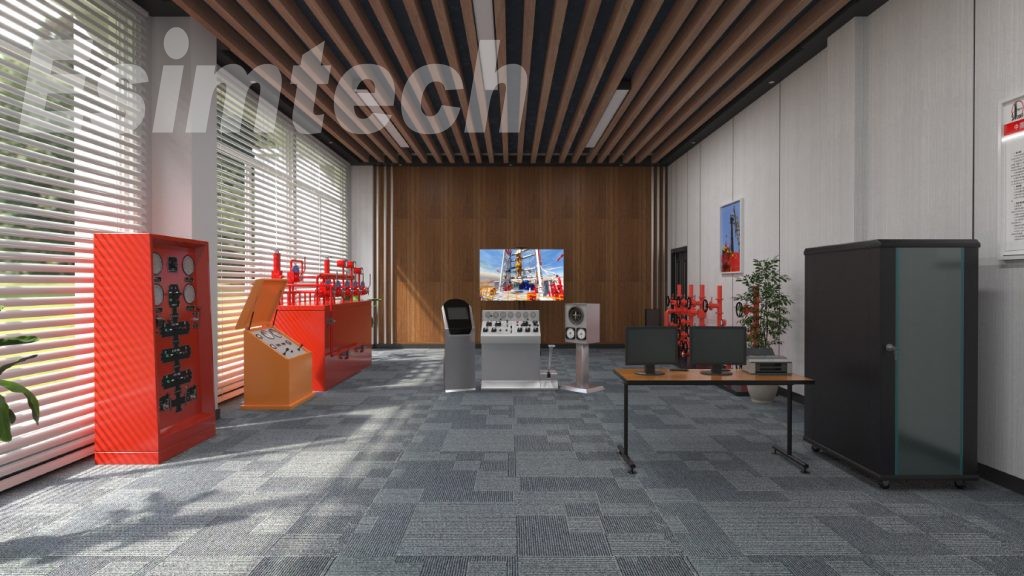 The operational rhythm that emerged was built around the debrief. Every session, without exception, ends with a playback review: the instructor replays the trainee’s actions, pauses at decision points, and discusses what the instruments were showing and what the correct response was. The center calls this the debrief culture, and it is the practice that separates their program from the dust-collecting simulators the director had seen elsewhere. The simulator records the evidence; the debrief turns the evidence into learning, and the center treats both as equally essential.
The scenario library grew with experience. After each certification cycle, the instructors reviewed the aggregate assessment data, identified the procedures where error rates were highest, and added or adjusted scenarios to target those weaknesses. The center also added a team-training module, where a full crew practices a workover job together, because the field supervisors insisted that coordination, not individual skill, was where jobs were won and lost. This continuous improvement loop, data in, curriculum out, became the program’s engine.
The Results: Skills That Show Up in the Field
The results are visible in three places. First, in the assessment records: completion times on standard procedures drop by roughly a third between a trainee’s first and fifth sessions, and safety-critical error rates fall to near zero in the advanced tier. Second, in the field: the operator’s supervisors report that simulator-trained technicians reach autonomous performance weeks earlier, and the contractor crews that complete revalidation show fewer procedural incidents on live jobs. Third, in the demand: the center’s Workover Simulator program is booked weeks in advance, with contractor companies paying for revalidation slots and neighboring operators inquiring about access.
The economics tell the same story. The program now runs at high utilization, and the revenue from contractor revalidation courses covers the center’s operating costs, turning the training center into a profit center for its owner. The simulation platform itself, supplied by Esimtech, has proven reliable across thousands of training hours, and the vendor’s support team has remained responsive throughout. For institutions considering a similar path, the lessons are direct. Start from the assessment requirement, not from the hardware. Budget for instructor development as seriously as for the equipment. Build the debrief into every session until it is a habit. And use the assessment data continuously, to improve the curriculum rather than merely to grade students. The simulator was the enabler, but the program was built by the people who designed the curriculum, ran the debriefs, and read the data.
The program’s success has already spread. The center now hosts visiting teams from other training institutions, and the director has given talks on the design process. The simulator manufacturer provided the platform, but the center proved the model: a simulator program succeeds when the institution treats it as a curriculum project with measurable outcomes rather than a hardware purchase. Eighteen months after that first needs assessment, the verdict from the field is in, and it is the one every training manager wants to hear: the graduates are ready, the crews are safer, and the program pays for itself.